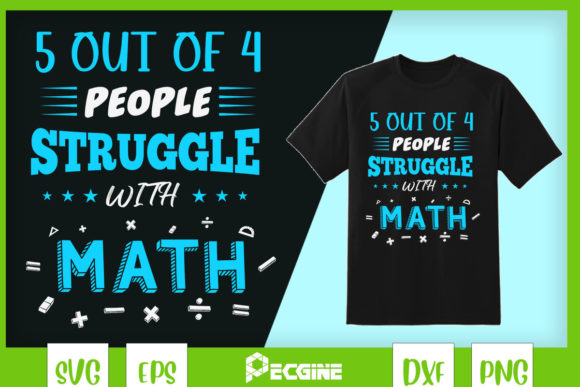
5 Out of 4 People Struggle with Math Graphics
As a designer who works on branding, marketing visuals, and printable products for small businesses, I often come across design assets that promise to be versatile but fall short in real-world applications. The 5 Out of 4 People Struggle with Math graphic is one such asset that caught my attention—not just for its catchy title, but for how it could fit into a variety of creative projects.
First Impressions: A Bold and Playful Visual
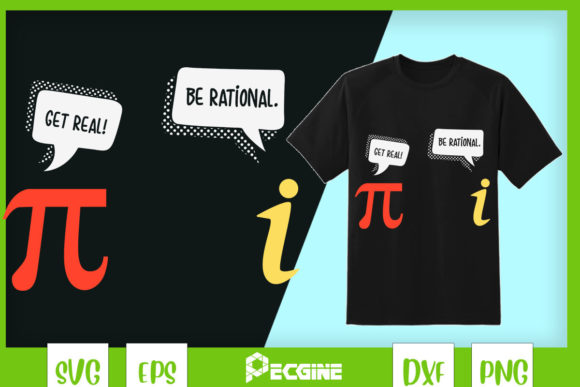
The first thing that stands out about 5 Out of 4 People Struggle with Math is its bold and playful visual style. It’s not the kind of design you’d use for a corporate logo or a minimalist brand identity, but it has a clear personality that makes it ideal for niche markets, handmade businesses, or quirky product lines. The typography is eye-catching, with a slightly edgy feel that suggests humor and irreverence—perfect for a t-shirt design or a social media graphic aimed at a younger, more casual audience.
This design feels like it was made for a creative marketplace, where uniqueness and character are valued over strict professionalism. It’s not subtle, but that’s part of its charm. If you’re looking for something that can stand out in a crowded digital space, this could be a strong contender.
Real-World Applications: From T-Shirt Designs to Social Media Graphics
In a real client project, 5 Out of 4 People Struggle with Math could serve as a central visual element in a variety of formats. For example, if a client wants to launch a line of math-themed t-shirts, this design could be the star of the collection. Its large, readable text and bold style make it suitable for print-on-demand platforms like Etsy or Shopify, where clarity and impact are key.
It also works well as a Canva template or a Cricut project, especially for users who want to create custom stickers, mugs, or tote bags. The inclusion of multiple file types—SVG, PNG, DXF, EPS—makes it easy to adapt for different uses, whether it’s for sublimation printing, laser cutting, or digital editing.
For packaging design or product mockups, this graphic could act as a decorative accent or a thematic centerpiece. It’s not the best choice for a high-end luxury brand, but for a small business targeting a fun, relatable audience, it could add a unique touch that sets them apart from competitors.
Where It Shines: Large Layouts and Themed Campaigns
5 Out of 4 People Struggle with Math performs best in large layout areas where its boldness can be fully appreciated. It’s ideal for hero graphics, campaign visuals, or themed collections where the message needs to be immediately recognizable. This makes it a great fit for social media graphics, blog visuals, or editorial design projects that require a strong visual statement.
It also works well in printable design formats, such as wall art or digital templates. Its clean lines and clear structure mean it can be scaled up without losing quality, making it a solid choice for design assets that need to be used across multiple platforms.
Where to Use It Carefully: Minimalist Branding and Professional Materials
While 5 Out of 4 People Struggle with Math has a lot to offer, it’s not a one-size-fits-all solution. In minimalist branding or professional corporate materials, this design might feel too loud or unrefined. It lacks the subtlety needed for a clean visual hierarchy, and its bold style could clash with more sophisticated design elements.
It’s also not the best choice for low-contrast designs or crowded layouts. If placed in a busy composition, the text may become hard to read, and the overall message could get lost. Designers should test it on light and dark backgrounds, check contrast levels, and ensure it remains legible at smaller sizes before using it in a final project.
Design Considerations: Testing and File Quality
Before using 5 Out of 4 People Struggle with Math in a client project, there are several practical steps every designer should take. First, test it in black and white to see how it holds up without color. Then, preview it at various sizes to ensure readability and scalability. If it’s going to be printed, check the print quality and confirm that the PNG transparency works as expected.
For vector-based work, inspect the SVG design or DXF files to make sure they’re editable and compatible with common design software. Also, compare it with different font styles—serif, sans serif, script, and display fonts—to see how it adapts to different contexts.
Finally, always verify the commercial license to ensure that the design can be used for client projects without legal issues. This is especially important for print-on-demand sellers or digital product creators who rely on their assets for income.
Conclusion: A Unique Asset for the Right Audience
Overall, 5 Out of 4 People Struggle with Math is a design asset that brings personality and playfulness to a project. It’s not the best fit for every brand, but for small businesses, handmade creators, or niche markets, it could be a valuable addition to their visual toolkit. Whether used for t-shirt designs, social media graphics, or Canva templates, this graphic has the potential to elevate a design concept and make it more engaging for the target audience.